

Posted by Mahé
on June 22, 2026

Paraphenylenediamine allergy affects thousands of people in France every year. Recognizing the signs, understanding the cause of this sensitivity, and identifying alternatives without this allergen: these are the three points addressed in this text.
Paraphenylenediamine allergy: everything to understand to protect yourself
Hair dyes are often associated with a routine action. Yet, some cosmetic products can trigger, sometimes late, a PPD allergy. Even after years of use without incident, a reaction can appear.
The PPD allergy is a well-identified contact allergy in dermatology, linked to a compound still widely present in permanent hair dyes on the market.
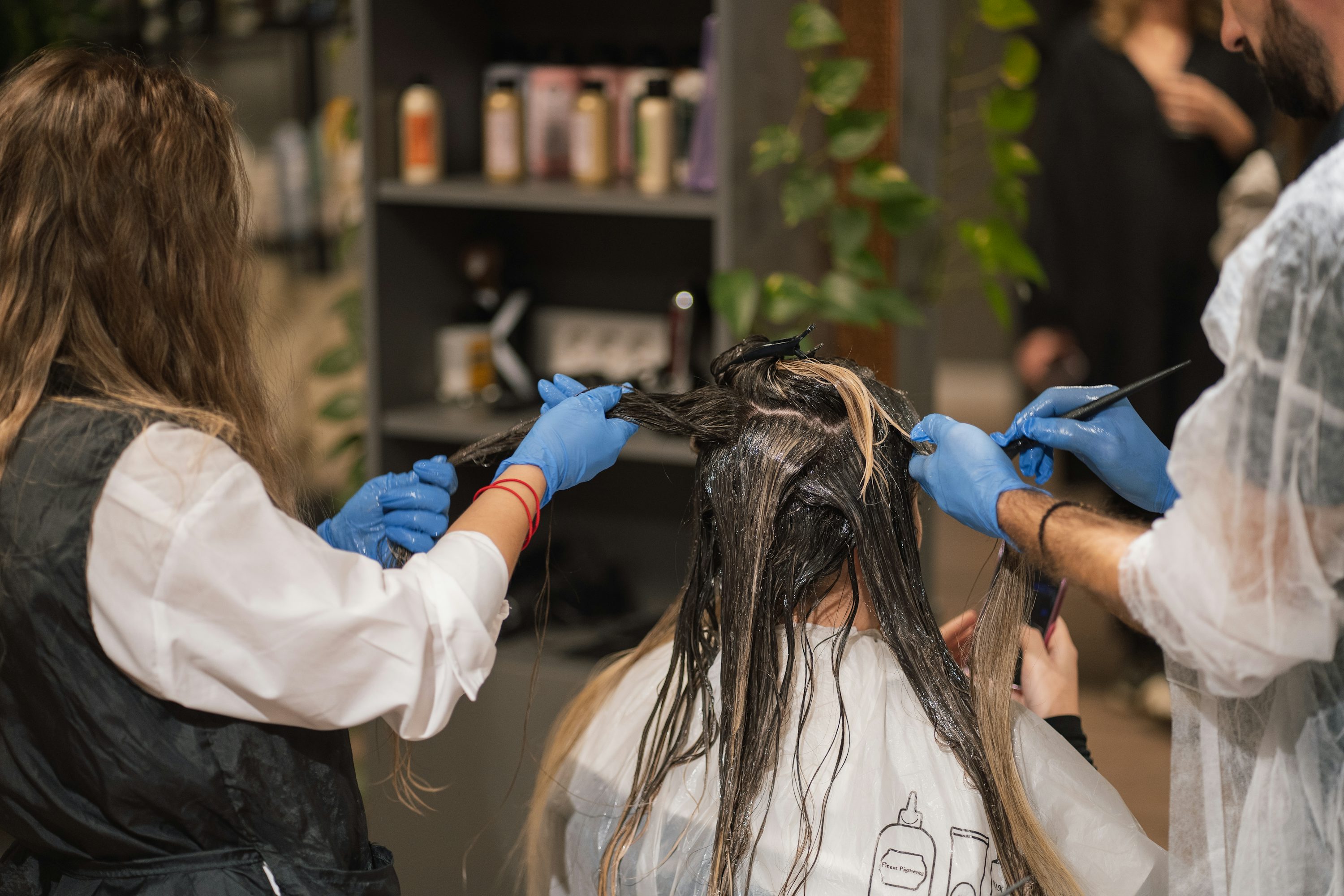
What is paraphenylenediamine in hair dyes?
Paraphenylenediamine, also called p-phenylenediamine or 1,4-diaminobenzene, is a hair dye used in the majority of permanent dyes. In hair cosmetic products, it is mainly used to obtain dark shades and long-lasting hold.
- Its role: it penetrates the hair and participates in a lasting color, especially for brown, dark brown, or black.
- The cause of sensitization: it is not the fully oxidized molecule that is problematic, but its partially oxidized form, produced during the chemical reaction.
- The regulatory framework: in France, p-phenylenediamine is prohibited in most cosmetics, except in certain hair dyes, with a maximum authorized concentration of 6%.
- The names to look for in the ingredients: it can appear under the mentions C.I. 76060, 1,4-Benzenediamine, Ursol D, or Developer 13.
The darker the shade, the higher the risk of finding this allergen in the hair dye. Reading the list of ingredients before any application on the scalp is therefore a concrete precautionary step.
Symptoms and severity of a PPD allergy
Paraphenylenediamine allergy does not always manifest in the same way. It can cause mild discomfort, but also an intense reaction requiring rapid management. The scalp is often on the front line, with signs sometimes extending to the face, ears, or neck.
- Frequent signs: itching, redness, burning sensation, itchy patches around the ears, eyelids, or base of the neck.
- More severe forms: severe eczema, blisters, oozing, swelling of the face or neck.
- Rare but serious situations: generalized hives, respiratory discomfort, asthma, or anaphylaxis.
PPD allergy was designated "Allergen of the Year" in 2006 by the American Contact Dermatitis Society. This classification illustrates a high sensitization potential, well documented in coloring cosmetic products.
Diagnosis, treatment, and duration of PPD allergy
The diagnosis is based on a reference medical test: the patch test performed by a dermatologist, generally with a 1% PPD solution in petrolatum.
In case of an acute allergic reaction, rinse immediately, wash the hair with mild soap, then apply a 2% hydrogen peroxide solution to limit the residual presence of paraphenylenediamine. Strong dermocorticoids can then be prescribed for one to two weeks. Lesions usually heal without scarring, but contact allergy persists over time.
| Step | Recommended action | Timeframe |
| Preventive detection | Home skin test, on the neck or in the crook of the arm | 48 to 72 hours before coloring |
| Medical diagnosis | Patch test with a dermatologist | By appointment |
| Acute reaction | Immediate rinse + 2% hydrogen peroxide | Immediately |
| Anti-inflammatory treatment | Application of dermocorticoids | 1 to 2 weeks |
| Long-term prevention | Total avoidance of chemical dyes containing PPD | For life |
What safe alternatives to dyes containing PPD?
When a paraphenylenediamine allergy is confirmed, avoidance of this allergen remains the rule. Dyes formulated with plants then allow to regain color without resorting to it, constituting a gentle alternative for sensitized scalps.
Our PPD-free alternative dye is formulated with plants, without ammonia, without resorcinol, without hydrogen peroxide, and without paraphenylenediamine. Developed for over 45 years, it offers a clear answer to people sensitive to chemical dyes, while helping to respect the hair fiber.
This botanical approach coats the hair instead of opening it. It allows to cover white hair from the first application, while choosing a gentler path for the hair and daily cosmetics, without compromise.
Frequently Asked Questions
How do I know if I am allergic to paraphenylenediamine?
A paraphenylenediamine allergy can manifest after a hair coloring with itching, redness, or a burning sensation on the scalp, ears, or face. These signs suggest an allergic reaction to this ingredient frequent in certain hair dyes and other cosmetic products. For a first reference, a skin test can be performed by applying the mixture behind the ear or in the crook of the arm 48 to 72 hours before coloring the hair.
This test remains useful, but it does not replace medical advice. In case of doubt, only a patch test performed by a dermatologist allows to confirm a contact allergy. It must also keep in mind that a PPD allergy can appear suddenly, even after years of use of chemical dyes or other cosmetics without incident.
Is PPD allergy permanent?
Yes, in the vast majority of cases, paraphenylenediamine allergy becomes permanent. Even at a low dose, a new exposure can cause a more marked reaction than the previous one. This is why, when a PPD allergy is proven, the total avoidance of this allergen is mandatory, including in daily cosmetics.
There are also cross-reactions with certain ingredients present elsewhere than in hair coloring: dark textile dyes, black rubber, or temporary tattoos with black henna.
What coloring to choose when you are allergic to PPD?
When you have a contact allergy to PPD, the safest choice is to turn to plant-based formulas, formulated with plants, without paraphenylenediamine, without ammonia, without resorcinol, and without hydrogen peroxide. This gentle alternative allows to color the hair while limiting the scalp's exposure to the ingredients often at fault in reactions related to chemical dyes.
These botanical solutions can also cover white hair from the first application. Conversely, some options from chemistry, including among semi-permanent dyes, remain likely to trigger a reaction in sensitive people. If you have a history of PPD allergy, it is better to check the composition of cosmetic products before any use and perform a preliminary test, even with treatments presented as gentler.
