

Posted by Mahé
on August 27, 2026

Table of Contents
- Understanding Natural Plant-Based Hair Color
- Plant-Based Hair Color and Highlights
- Organic Hair Color and White Hair
- Choosing an Eco-Friendly Hair Color Without Compromise
- Frequently Asked Questions
Choosing an eco-friendly natural hair color involves much more than an aesthetic decision. It is also a way to take care of your hair and your health while minimizing your impact on the environment. This guide helps you understand how plant-based hair color works, assess its results, anticipate its limitations, and select the right formula for your hair and your values.
Understanding Natural Plant-Based Hair Color
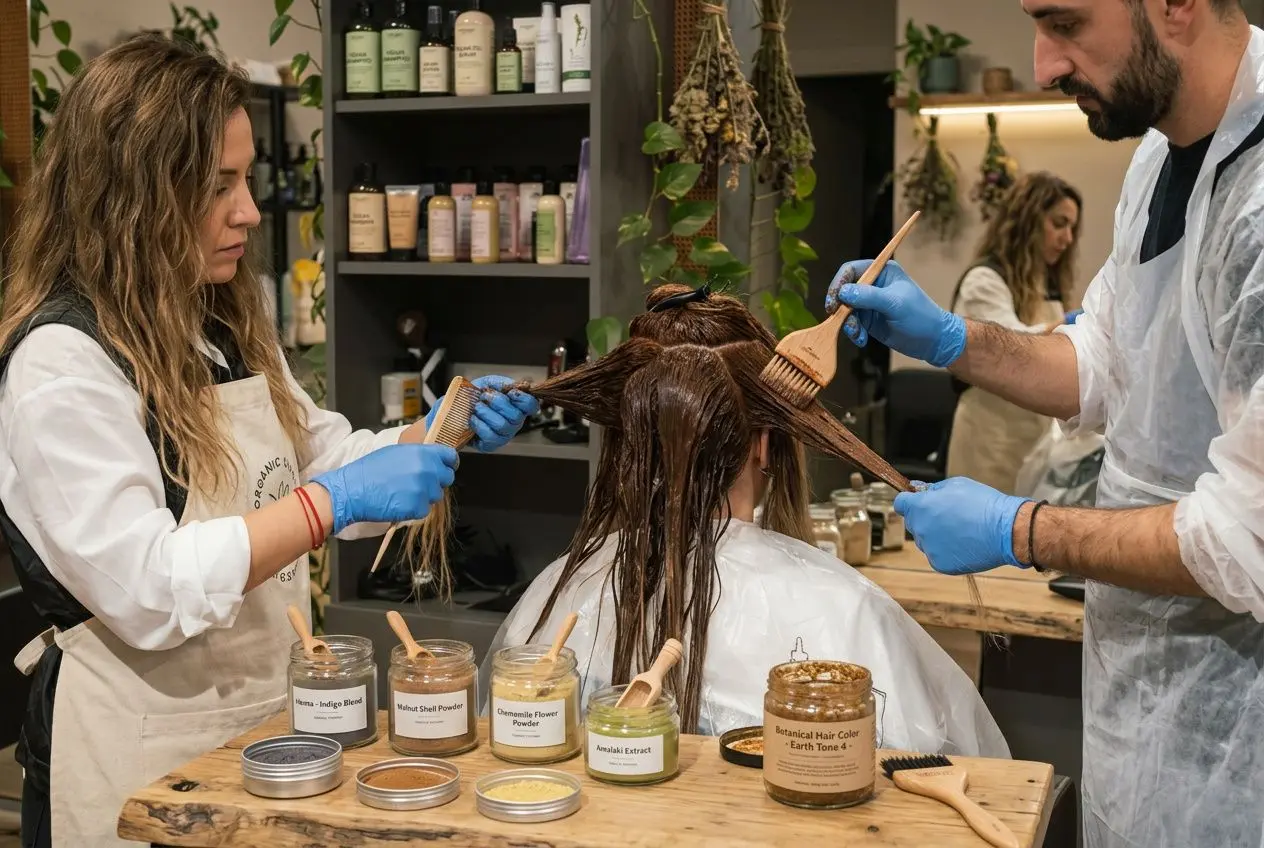
Plant-based hair color is made from natural plant dye powders. Their natural pigments deposit on the surface of the hair fiber. Unlike conventional oxidation formulas, it does not open the hair cuticle to alter its internal pigmentation.
How It Works on Each Hair
Natural pigments from dye plants attach to the keratin and coat the fiber in a protective, coloring veil without penetrating the core of the hair. This helps preserve the hair structure and can add shine, volume, and body, especially to fine, dry, or weakened hair. Choosing a botanical plant-based hair color means respecting the hair fiber without compromise.
After rinsing, the pigments continue to oxidize. The final shade fully reveals itself over the next three to four days. The color then gradually fades with washing, which helps minimize root demarcation. Furthermore, organic plant powders, grown without pesticides, break down naturally and can help reduce water and soil pollution compared to conventional formulas.
The Limitations of Plant-Based Hair Color
Choosing a natural chemical-free hair color means understanding its limitations. A plant-based formula cannot lighten or bleach hair. The chosen shade must therefore be identical to or darker than the starting color to achieve a consistent result. Porosity, the proportion of white hair, and the natural base color all influence the final result. A strand test is essential before the first application.
- No lightening possible: plant-based hair color deposits pigments without altering the existing base color. It cannot, therefore, lighten hair to blonde or bleach it on its own.
- Limited palette: shades range from warm blondes to deep browns, including coppery tones. Fashion shades such as gray or pink are not achievable with this method.
- Longer processing time: depending on the formula and the desired intensity, application generally takes between 45 minutes and two hours, compared to 30 to 40 minutes for standard chemical hair color.
- Results vary depending on the hair: porosity and the proportion of white hair influence how the color takes. A strand test therefore helps you better anticipate the final result.
The term "natural" never eliminates the need to check the INCI list or perform a sensitivity test 48 hours before application. Some people may react to ingredients of botanical origin. For over 45 years, our approach has focused on a gentle, plant-based alternative designed to carefully care for every strand of hair. See the guide to natural plant-based hair color.
Plant-Based Hair Color and Highlights
Behind every plant-based shade is a combination of dye plants chosen for their coloring properties and their effect on the hair fiber. Knowing the role of each helps you anticipate the result, adapt the mixture to your natural base, and respect the hair fiber. This is a consistent approach to caring for your hair and your health without compromising on color precision.
From Coppery Henna to Deep Browns
Henna, derived from Lawsonia inermis, releases lawsone, a pigment that creates highlights ranging from coppery to red. The result depends notably on the origin of the plant, the starting base, and the processing time. Indigo, obtained from Indigofera tinctoria, adds depth to mixtures. Combined with henna, it produces a more pronounced brown or dark brown shade. These two plants form the basis of many traditional botanical hair colors.
Amla, rooted in Ayurvedic traditions, adds shine and can cool down certain highlights. Madder supports warm tones, while chamomile brightens light bases and katam helps add nuance to the color. It is still possible to prepare a natural homemade hair color with coffee, black tea, or turmeric, but these infusions only provide temporary, subtle highlights. They cannot replace the precision of a tailored dye powder formula.
- Henna: coppery to red highlights and a coating effect on light to dark brown bases for a luminous color.
- Indigo: adds depth and a cooler tone. It is always used with henna to achieve brown shades and is not recommended on its own for white hair.
- Amla and madder: complementary plants that balance coloring synergies, enhance shine, and support warm tones or cool down highlights depending on the mixture.
The quality of preparation directly influences the natural result. The paste, mixed with hot water, must be smooth before being applied to clean, dry hair. Indigo should be used quickly after preparation to minimize pigment degradation. The plant-based hair color range available today offers formulas with carefully mastered combinations from the design stage. This makes application easier and the final shade more reliable.
Homemade Recipe Precautions
Understanding the potential risks of plant-based hair color is essential for making an informed choice. Even a formula of botanical origin can cause an individual reaction, especially on sensitive hair or in cases of a history of allergy to hair dye. A sensitivity test performed 48 hours before application remains essential, regardless of the stated composition. Unformulated homemade recipes carry greater risks due to poorly controlled concentrations and unpredictable results, both in terms of color and the scalp.
Hair color is strictly contraindicated in cases of active skin rash. Before age 16 or in case of medical doubt, seek advice from a healthcare professional before any application. These precautions do not undermine the benefits of formulas of botanical origin. They simply remind us that a natural product derived from plants and formulated with plant-based ingredients deserves the same attention as any other. For over 45 years, this standard has guided an approach based on care: a gentle alternative that respects the hair fiber.
Organic Hair Color and White Hair
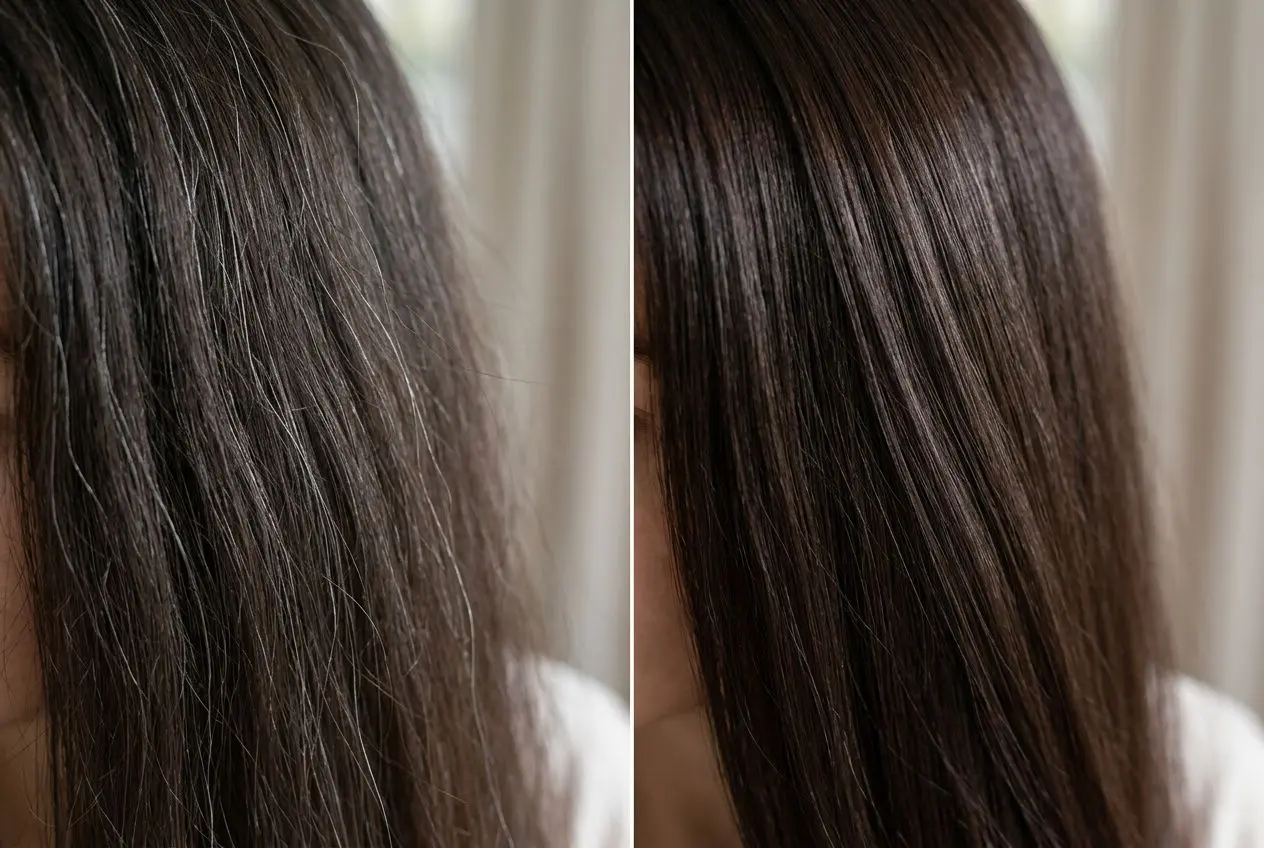
Covering white hair is often the primary selection criterion when choosing a plant-based hair color. However, the result depends on several factors: the fineness of the powders, the formulation, hair porosity, and the proportion of depigmented areas. There is therefore no universal answer. Every product should be evaluated on a test strand.
Pre-pigmenting According to the Percentage of White Hair
For those looking for a natural hair color for white hair, the 30% threshold of depigmented areas is often a useful guideline. Below this, a plant-based application may be sufficient, depending on the chosen shade and the quality of the preparation. Above this, many formulas recommend two steps: a warm pre-pigmentation, followed by the final hair color.
- Less than 30% white hair: a single plant-based application, properly prepared, can provide satisfactory coverage depending on the shade and formula.
- More than 30% white hair: a warm pre-pigmentation is recommended before the final shade to achieve a more even color.
- Very dark shades with henna and indigo: some combinations can provide coverage in a single step. However, a strand test remains essential on the whitest areas.
Indigo used on its own is not recommended for very white hair. The result may lack stability or reveal unwanted highlights. The processing time generally ranges from 45 minutes to two hours, depending on the formula and the expected level of coverage. After rinsing, wait at least 48 hours before the first shampoo. This allows the natural pigments time to set and the color to develop.
Making Highlights Last
To find the best organic hair color for white hair and prolong its effect, aftercare is just as important as the application protocol. Gentle shampoos and conditioners, ideally free of harsh sulfates and silicones, help preserve the botanical pigments week after week. Washing frequency also plays a role: spacing out shampoos often helps maintain the shade longer.
Light bases can gradually revive their blonde highlights without harsh processing using this natural chamomile lightening shampoo. Formulated with matricaria chamomilla and free of ammonia and hydrogen peroxide, it gradually lightens the hair fiber from light brown to blonde thanks to the plant's softening and brightening properties. Its 200 ml size is suitable for regular use as a replacement for your usual shampoo. Its plant-based, organic composition makes it a gentle solution for regular use.
Choosing a Hair Color Without Compromise on Eco-Friendliness
Choosing a color of botanical origin requires comparing concrete criteria: mode of action, composition, environmental impact, and the brand's commitments. A responsible choice is based on verifiable information, not general claims. Here are the essential guidelines for evaluating a formula, from the INCI list to the growing conditions of the dye plants.
Plant-Based or Chemical Hair Color
The difference between plant-based hair color and permanent chemical hair color lies first in how it acts on the hair fiber. The former deposits pigments on the surface and coats the hair. The latter penetrates the core of the hair shaft and alters its internal pigments using agents such as ammonia and hydrogen peroxide.
For those looking for hair without harsh chemicals, the botanical approach is a gentle alternative designed to respect the hair fiber.
- Plant-based hair color: deposits pigments on the surface, coats the fiber, requires a longer processing time, and offers a nuanced palette from coppery to deep brown. It gradually fades with washing.
- Permanent chemical hair color: penetrates the fiber, provides quick results, and offers significant coverage. Touch-ups are frequent, with a risk of progressive weakening with repeated use.
- Coating formula without henna (MAHÉ): a cosmetic synthetic dye incorporated into a formula containing 93–98% ingredients of natural origin. It is free of ammonia, resorcinol, hydrogen peroxide, and parabens. However, it is neither plant-based in the dye-powder sense nor a permanent chemical hair color.
- Mineral hair color: a creamy formula based on plant-based active ingredients and mineral pigments, free of ammonia, with a short processing time, an extensive palette, and coverage of up to 100% of white hair.
On hair that has recently been bleached or very lightened, preparations containing indigo can create unwanted green or bluish highlights. It is also not recommended to bleach or highlight hair after applying a formula rich in indigo. A strand test remains essential.
| Criterion | Plant-Based Hair Color | Chemical Hair Color | MAHÉ (Coating Formula) |
| Mode of Action | Deposits on the surface of the fiber | Penetrates the fiber | Coats without penetrating |
| Ammonia / Hydrogen Peroxide | None | Present | None |
| White Hair Coverage | Varies by Formula | High and Fast | Up to 100% from the 1st Application |
| Processing Time | 45 min to 2 h | 30 to 40 min | 45 to 60 min |
| Fading | Gradual, without a Sharp Line | Visible Root Demarcation | Gradual, without a Harsh Line |
| Impact on Hair Fiber | Respectful, Coating | May Weaken Over Time | Respectful, Surface Care |
Evaluating a Light Blonde Hair Color
For light bases, the palette of plant-based hair colors remains limited. Chamomile and certain dye plants can brighten light blonde hair, but they do not provide the precision of a tailored shade. A plant-based hair color cannot immediately lighten a darker base; a shade slightly darker than the natural color is always the safest choice for a harmonious result.
To gradually lighten natural hair from light brown to blonde, botanical solutions rely on the well-established properties of German chamomile. The effect is enhanced with each application, as well as by sun exposure and air-drying in summer. This gentle lightening, without aggressive chemical action, is more a matter of regular maintenance than immediate transformation.
To know how to choose the right plant-based hair dye for your light base, carefully check the INCI list and the declared natural ingredients. The environmental impact also depends on packaging, delivery, and the hot water used during shampooing. The eco-advertising regulations govern the environmental claims of cosmetic brands and require a careful reading of the displayed promises.
Compare brand commitments
Evaluating a brand specializing in botanical color is not limited to observing its packaging. You must examine the traceability of the plants, the effective absence of controversial components in the INCI list, and the consistency between the announced commitments and the proposed formula.
MAHÉ has exemplified this approach since 1979. Born from Madame Mahé's allergy, a professional hairdresser, to permanent dyes, the brand has been developing for over 45 years formulas and hair care products intended for sensitive and allergic scalps, with clearly stated composition exclusions.
- INCI transparency: check that every claimed botanical ingredient is indeed in the full INCI list, without vague declarations or unsupported generic arguments.
- Origin of plants: favor brands that specify their geographical origin and growing conditions, especially when dye plants come from certified organic farming and are grown without pesticides.
- Professional plant-based dyes: some formulas are developed with expert hairdressers. This collaboration brings field experience and application protocols proven over the years.
MAHÉ is available on mahefrance.com, in pharmacies, organic stores, and herbalist shops. To benefit from loyalty advantages, discounts on shampoos and hair care products, as well as free delivery from 80 euros, visit the plant-based dye deals on the website.
Comparing formulas and understanding their action allows you to move forward with peace of mind. It is a natural way to take care of your hair and your hairline, without compromising on your ecological convictions or your well-being. Every shade deserves a tailored approach. This information guides you toward a plant-based solution.
Frequently Asked Questions
What is the least harmful hair dye?
A botanical dye, formulated without ammonia, hydrogen peroxide, PPD, or resorcinol, is the option that best respects the hair fiber. It deposits pigments on the surface, without opening the cuticles or altering the internal structure of the hair. This thus limits long-term weakening.
MAHÉ formulas incorporate a cosmetic colorant in a base composed of 93 to 98% ingredients of natural origin. They are suitable for sensitive scalps because they contain neither henna nor classic aggressive components. For over 45 years, MAHÉ has taken care of your hair as well as your health, without compromise. A sensitivity test carried out 48 hours before any first application remains essential, whatever the formula chosen, because every scalp reacts differently.
Can you achieve an effective natural dye at home?
Yes, a plant-based dye at home is possible with quality dye plant powders. However, the protocol must be followed precisely: homogeneous mixing, application strand by strand on clean and dry hair, a time of application adapted to the desired shade, and a prior sensitivity test.
Homemade recipes based on coffee, black tea, or chamomile only produce temporary and subtle highlights. They do not replace the precision or hold of a professional formula based on plant powders. For more reliable results, especially on white hair, opt for plant-based dyes designed by hair experts. They offer better control over the final color.
How to choose the right plant-based dye according to your natural color?
The principle is simple: a plant-based dye cannot lighten the base. It deposits a shade identical or darker than the natural color. On light brown, a mixture with a copper or brown dominance creates a harmonious result. On a darker base, indigo brings more depth.
The proportion of white hair also determines the protocol, notably the need for pre-pigmentation. A strand test remains the best way to anticipate the result. It also allows you to check the absence of a skin reaction before applying the dye to the entire head of hair. These plant powders respect the hair fiber and the scalp.
