
Posted by Mahé
on July 11, 2026

Table of Contents
- The health risks of chemical hair dyes
- Powdered plant-based hair dye: uncompromising color
- Precautions, alternatives and advice for a sustainable botanical approach
- Frequently Asked Questions
Choosing a safe, natural hair dye requires looking beyond the promise of color. What matters is the formula, how it works, and its repeated effects on the scalp, hair fiber, and overall health. To make an informed choice, you need to know which ingredients to avoid, distinguish a genuine natural hair dye from a simple ammonia-free dye, and understand why a plant-based formula is a gentle alternative.
The health risks of chemical hair dyes
Chemical hair dyes rely on an oxidation process that transforms the hair deep down. This process involves chemicals and chemical substances known for their potential to cause irritation or sensitization, especially with repeated use. A plant-based formula is a serious alternative to these exposures.
Ammonia, PPD and oxidizers: ingredients to be wary of
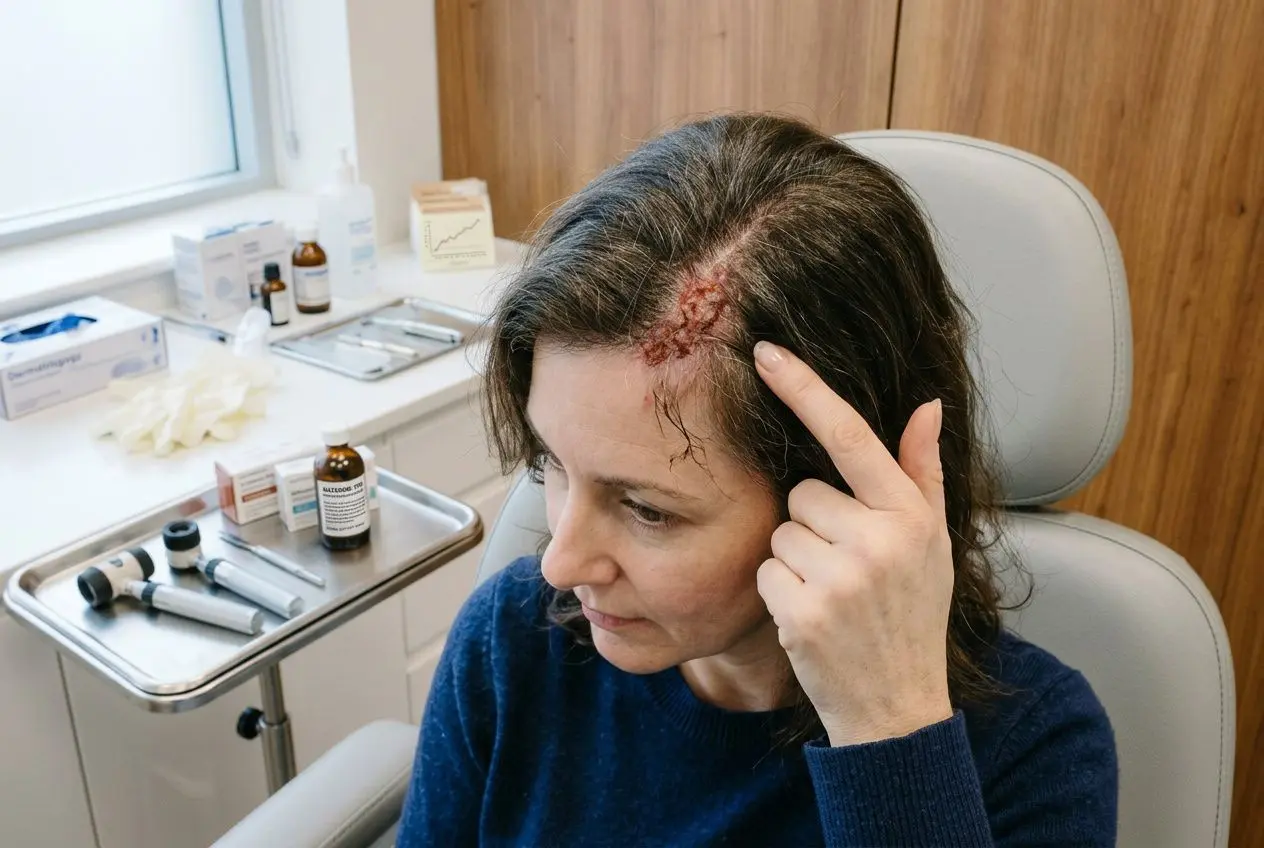
The danger of ammonia in hair dye is not an empty claim. Ammonia opens the cuticles to allow synthetic pigments to penetrate, weakening the hair with each application and potentially irritating both the skin and the respiratory tract. In addition to this action, an oxidizer, often peroxide—more specifically hydrogen peroxide—is used to alter the hair's natural base.
Another substance to watch out for is PPD, or paraphenylenediamine. It is the main allergen in dark shades in permanent hair dyes, with a risk of irreversible sensitization. If you would like to learn more about this, see our article on PPD allergy in hair dyes.
- Hydrogen peroxide: an oxidizer that alters natural melanin, making the hair fiber more porous, brittle, and often duller over time.
It is also important to clear up a common misconception. An ammonia-free dye is not necessarily free from harsh agents: it is often still an oxidation dye, containing peroxide and sometimes sensitizing derivatives. The absence of ammonia therefore does not mean the absence of chemicals, nor the elimination of the risk of an allergic reaction.
Endocrine disruptors and documented chronic effects
Choosing a hair care product without endocrine disruptors means taking care of both your hair and your health. In many conventional formulas, certain molecules such as toluene-2,5-diamine sulfate or resorcinol have been identified as compounds with hormone-disrupting activity. Other ingredients, such as aromatic amines or formaldehyde, are also subject to documented health concerns.
Available data show that repeated use of permanent hair dyes increases cumulative exposure to these compounds. Some studies suggest a 9% increased risk of breast cancer among regular users, while a link with bladder cancer has been documented among long-term exposed professionals. The formula alone is not enough to measure the risk: the frequency of application plays a decisive role.
In the long term, the accumulation of small doses of chemical substances can have a greater impact than occasional use. Some formulas also contain parabens, which may increase redness and itching on the scalp. For those who want to protect the hair fiber over time, this chronic exposure deserves serious attention.
What do health authorities say about permanent hair dyes?
Between 2019 and 2025, Anses recorded 124 adverse effects related to hair dyes. Among them, 91% concerned permanent hair dyes, and 63% were considered serious: chemical burns, severe allergic reactions, or breathing difficulties. These reports serve as a reminder that a chemical hair dye is never harmless, especially when it relies on oxidation compounds.
The LUMIEAU-Stra report also highlights significant cytotoxic effects and DNA damage linked to these formulas. In this context, turning to a plant-based solution formulated with plants is a sensible approach for those who want a long-lasting color without increasing their exposure to harsh compounds. For over 45 years, this hands-on expertise has shown that it is possible to achieve serious results with a plant-based approach designed to respect the hair fiber and preserve health.
If you are looking for a practical guide to choosing the right shade, you can consult our guide: natural plant-based hair dye.
Powdered plant-based hair dye: uncompromising color
On one hand, an oxidation process that transforms the hair fiber deep down. On the other, a gentle plant-based alternative designed to respect the hair fiber and take care of both your hair and your health.
How does a natural plant-based hair dye work?
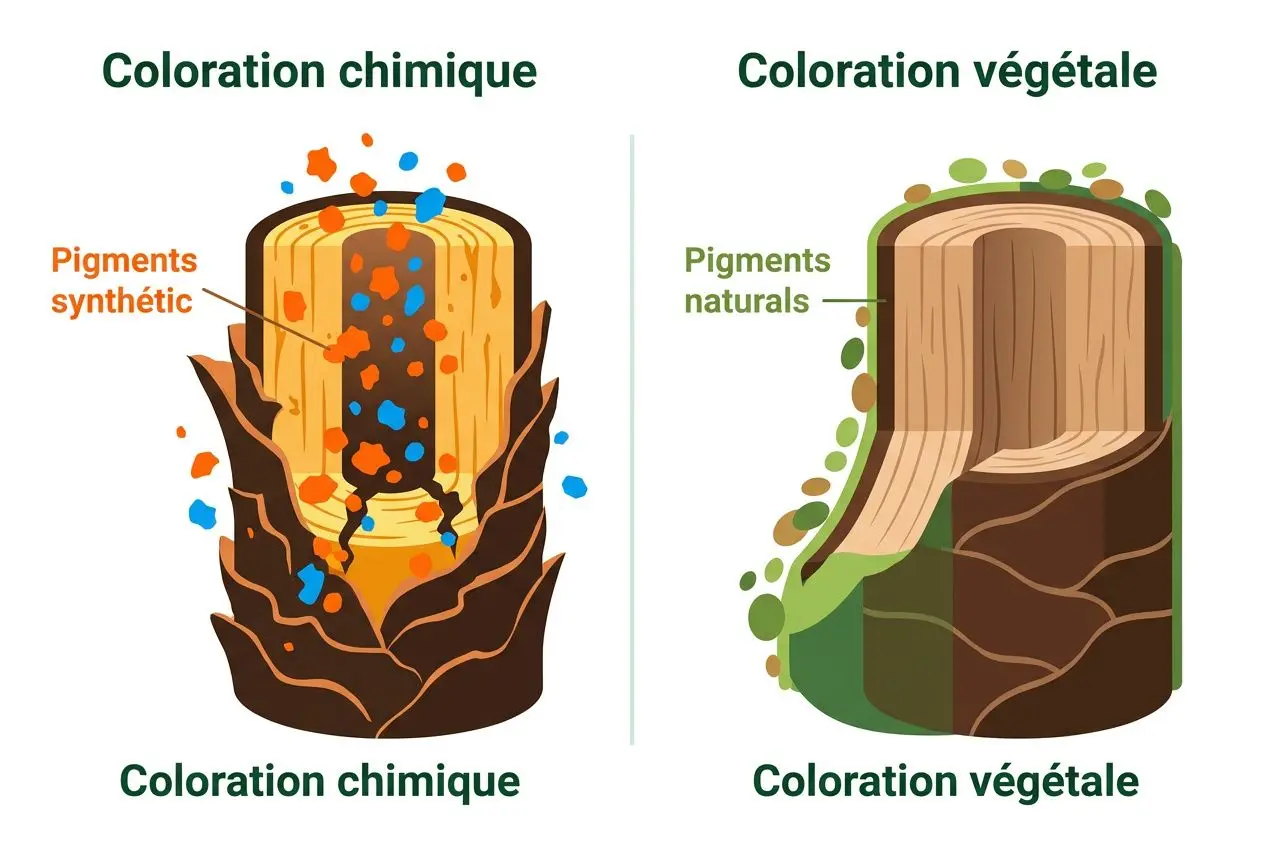
A safe hair dye is based on a simple principle: use powdered plants, flowers, bark, or spices, then mix them with hot water when preparing the dye. A genuine plant-based hair dye contains no ammonia, oxidizers, or hydrogen peroxide. It also does not rely on synthetic pigments or other chemical substances designed to force the hair cuticles open.
Here, pigments of botanical origin deposit around the hair fiber instead of chemically transforming it. The color coats the hair, adds substance, and helps protect the scalp. This approach is suitable for those seeking a hair dye formulated with botanical ingredients, without compromising between visible results and hair health.
Mahé's natural hair dye does not use plants to color the hair, but works in the same way with a ready-to-use product.
For over 45 years, MAHÉ's hands-on expertise has resulted in formulas composed of 93% to 98% natural-origin ingredients, free from parabens. The ingredients are selected for their affinity with the hair fiber, with a clear goal: to offer a botanical hair dye that protects as much as it colors.
Safely covering gray hair with henna
To cover gray hair, henna and indigo are among the best-known plant-based hair dyes. Used together, these plants provide a natural, gradual, and nuanced color, from brown to darker shades. Free from PPD, ammonia, chemical oxidizers, and hydrogen peroxide, this approach significantly reduces exposure to the harshest chemical substances. However, Mahé's hair dye offers a third alternative: a pigment-based dye that avoids the unwanted undertones of plants and hair dryness.
Coverage is 100% from the first application, depending on the starting base, the percentage of gray hair, and the hair type. The result remains vibrant. Never flat. While chemical hair dyes force the cuticles open to deposit a pigment, the plant-based formula deposits its color on the surface without altering the fiber's internal structure.
The MAHÉ Les Fondamentales range offers six main shades: Dark Brown (No. 2), Brown (No. 4), Light Brown (No. 5), Blonde (No. 7), and Light Blonde (No. 8). These shades gradually fade with each wash, allowing for reapplication every 4 to 6 weeks without further weakening the hair fiber or upsetting the scalp.
How to choose a genuine plant-based hair dye without greenwashing
The word "natural" is not enough. Some formulas contain a few botanical extracts while still containing a majority of synthetic ingredients, an oxidizer, or hydrogen peroxide. To identify a genuine plant-based hair dye, or even a natural lightening shampoo consistent with this approach, three checks are useful.
- Complete INCI list: check that the ingredients are plants, henna, indigo, or other clearly identifiable botanical active ingredients, rather than synthetic molecules hidden behind vague claims.
- Recognized certifications: Cosmos Organic, Ecocert, or BDIH labels provide useful information about the actual percentage of natural-origin ingredients and independent formula testing.
- Absence of oxidizing agents: a genuine natural hair dye contains no ammonia or hydrogen peroxide. The presence of an oxidizer immediately makes the product more like a chemical hair dye, even if the packaging highlights plants.
In practice, a credible organic hair dye relies on clear and consistent ingredients. If the formula only mentions botanical extracts while still containing chemical oxidation substances, it cannot be called a genuine plant-based hair dye. Since 1979, MAHÉ has upheld this standard with a plant-based approach designed to provide consistent color while limiting the risk of an allergic reaction.
| Criterion | Permanent chemical hair dye | MAHÉ natural hair dye |
| Ammonia | Present | Absent |
| PPD / oxidizing allergens | Common in dark shades | Absent |
| Hydrogen peroxide | Always present | Absent |
| Allergic risk | High, irreversible | Very low |
| Impact on the hair fiber | Opens and weakens the cuticles | Coats without penetrating |
| Available hair dye types | Wide range, ash shades possible | Warm shades, 6 basic shades |
Precautions, alternatives and advice for a sustainable botanical approach
Choosing a botanical formula is not enough on its own. To maintain a beautiful color over time, you must also understand what you are applying to your scalp, identify substances to avoid, and adopt consistent hair care practices.
Recognizing and avoiding PPD in your hair care routine
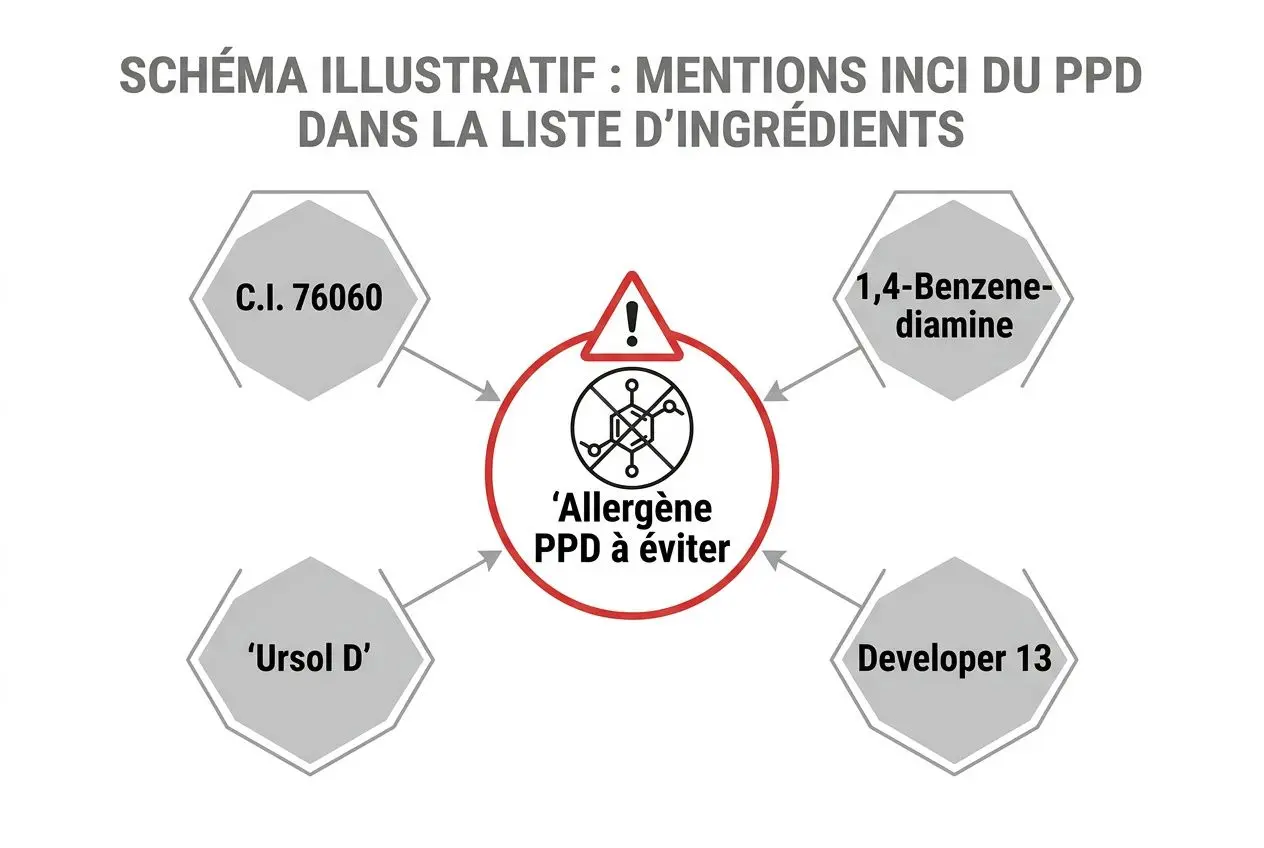
When looking for a safe natural hair dye, the first step is to check the composition of the hair dye. PPD, common in chemical hair dyes, can appear under several names in INCI lists: C.I. 76060, 1,4-Benzenediamine, Ursol D, or Developer 13. The darker the desired shade, the more vigilant you need to be, especially with synthetic formulas.
The risk should never be underestimated. Allergic reactions can occur suddenly, even after years of use without problems. An allergic reaction can cause itching, redness, and a burning sensation around the ears or the back of the neck, followed, in more severe cases, by blisters and facial swelling. Once an allergy is confirmed, avoiding PPD becomes essential in all everyday products.
- Preliminary skin test: apply the mixture behind the ear or in the crook of the elbow 48 to 72 hours before any application, including with a formula made from plants. This step remains useful but does not replace medical advice.
- Cross-reactions: in case of a confirmed PPD allergy, pay attention to dark textile dyes, black rubber, and black henna used in some temporary tattoos, which may expose you to similar substances.
- Medical diagnosis: a patch test performed by a dermatologist using a 1% PPD solution in petrolatum remains the standard method for confirming sensitization and recommending a suitable alternative.
- Persistent allergy: contact allergy to PPD is often long-lasting. Once established, it requires constant vigilance.
To learn more, you can consult our article on the health risks related to paraphenylenediamine (PPD).
At-risk populations: who should absolutely avoid chemical hair dyes?
Some people should exercise extra caution with chemical hair dyes, especially when they contain ammonia or other harsh agents. Before age 16, these products are strongly discouraged. Pregnant women are also advised to exercise the utmost caution due to the possible skin penetration of certain substances. In this context, the least toxic hair dye is often a plant-based approach, designed as a gentle alternative.
This caution also applies to people with a scalp that is sensitive, irritated, or already weakened by a previous allergic reaction. A well-chosen botanical formula helps to color without exposing the hair fiber to overly aggressive components. It allows for the addition of nuance while seeking to respect the hair fiber.
To gradually lighten light brown to blonde hair, this chamomile lightening shampoo offers a suitable solution. Formulated with plants, without hydrogen peroxide or ammonia, it is a gentle alternative for those who wish to brighten their hair while respecting the hair fiber.
Maintaining and enhancing your botanical color daily
After applying a plant-based color, wait at least 72 hours before the first shampoo. The natural pigments continue to develop for about four days, allowing the color to gain depth and longevity.
With mahé color, you get the desired color right after application.
Then, opt for an organic shampoo without harsh agents and a silicone-free treatment to smooth the cuticles, preserve shine, and prolong the result. A consistent routine allows the result to reveal its full richness, especially when based on henna or other well-balanced plant powders.
Blonde hair that wishes to revive its golden highlights can turn to targeted chamomile care. Its Chamomilla Recutita extract helps to gradually lighten the hair, without resorting to the most aggressive oxidizing processes. Letting the lengths air dry, then enjoying the sun in summer, can gently enhance this effect.
For over 45 years, field expertise has shown that a well-managed plant routine lasts through consistency: observe your hair, adapt the treatments, and choose truly consistent botanical formulas. The botanical approach, when well understood, remains a reliable answer for those seeking an alternative to synthetic dyes.
Frequently Asked Questions
What is the least toxic hair dye?
When looking for the least toxic hair dye, we first compare the ingredients. Henna and indigo formulas, derived from plants, constitute a gentle alternative to classic permanent dyes, because they are formulated without compromise, with botanical active ingredients, without ammonia, without PPD, without oxidizer, and without hydrogen peroxide. They coat the hair instead of transforming its structure, which helps to respect the hair fiber and take care of your hair as well as your health.
The bioassays of the LUMIEAU-Stra project also indicate a very low cytotoxic impact compared to synthetic formulas. Conversely, an oxidizing hair dye, even presented as "ammonia-free," remains linked to an allergic risk and is not a completely neutral alternative for health.
Which natural dye is truly safe for hair?
A botanical hair dye is more reassuring when it is based on a short, readable list composed of natural ingredients. We then avoid synthetic dyes, PPD derivatives, and any system with an oxidizer. Cosmos Organic or Ecocert labels constitute reliable benchmarks to evaluate the composition before purchase.
For over 45 years, field expertise has shown that a well-thought-out plant formula can cover gray hair while respecting the hair fiber. At MAHÉ, color treatments are formulated with plants, with 93% to 98% natural ingredients, without ammonia, without PPD, without hydrogen peroxide, and without parabens.
Can you use a botanical color during pregnancy?
Caution often leads to avoiding chemical permanent dyes due to the possible presence of active substances whose assessment remains debated for health.
In this context, a color treatment formulated with plants appears as a more serene option. Without ammonia, without synthetic agents, and without a hydrogen peroxide system, it constitutes a gentle alternative for people who want to limit exposure. As a precaution, a skin test 48 hours before application is recommended, because no product, even one derived from plants, completely excludes an allergic risk.
