
Posted by Mahé
on August 31, 2026

Table of Contents
Choosing a non-permanent ammonia-free hair dye means distinguishing a temporary formula from a semi-permanent one, but also identifying the ingredients to avoid. Here, you will find everything you need to compare formats, assess their gentleness, and choose a color suited to your hair, whether it is white, colored, or sensitive.
Choosing a non-permanent ammonia-free hair dye
Hair mascaras, sprays, mousses, gels, creams, and semi-permanent formulas are used for different purposes. Their hold and level of color commitment also vary. You should also consult this guide to natural plant-based dyes to better understand the effects of henna, indigo, and amla on the hair fiber.
Temporary or semi-permanent hair dye
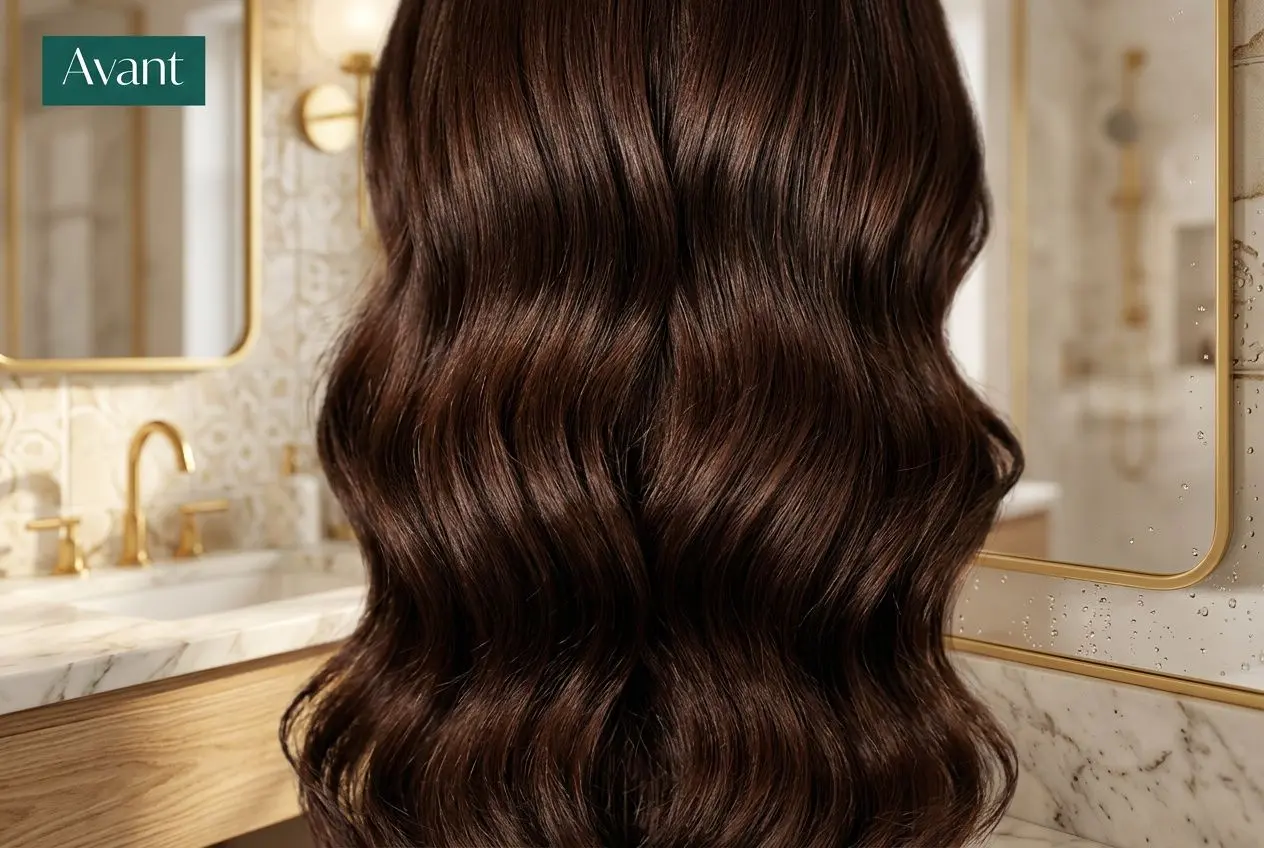
Non-permanent hair dyes fall into two main categories. Temporary hair dye deposits its pigments on the surface of the hair without oxidation, then washes out after a few shampoos. It does not create a sharp line as it fades. The semi-permanent formula slightly penetrates the outer layers of the fiber and can last up to ten shampoos. Neither requires ammonia.
- Variable hold: a color chalk lasts one day, a spray 2 to 3 shampoos, a gel 6 to 8 shampoos, and a classic semi-permanent formula up to 6 to 8 weeks, depending on how often you wash your hair.
- No lightening: these products can darken, shade, or add highlights, but they cannot make hair lighter than its natural base without bleach.
- Partial coverage of white hair: depending on the shade and the nature of the hair, a temporary formula can blend white hair by up to 30%.
- Alkaline agents may be present: an ammonia-free formula may contain monoethanolamine or hydrogen peroxide. The absence of ammonia is therefore not enough to rule out all potential sensitizers.
To identify a truly gentle formula, examine the INCI list, recognized certifications, and the possible presence of oxidizing agents. A few botanical extracts do not turn an oxidizing product into a compromise-free solution. For more information, this guide to safe natural dyes presents the risks associated with chemical dyes and plant-based alternatives.
| Format | Estimated hold | Application precision | Risk of transfer |
| Color chalk | 1 day | High | Yes |
| Color spray | 2 to 3 shampoos | Low (2/5) | Yes |
| Coloring mousse | 3 to 6 shampoos | Low (2/5) | Partial |
| Hair mascara | 1 to 2 shampoos | Maximum (5/5) | No (after drying) |
| Semi-permanent gel or cream | 6 to 10 shampoos | Medium (3/5) | No (after drying) |
| Coloring shampoo | 3 to 5 shampoos | Low (1/5) | Partial |
The format therefore influences the result as much as the shade. An Ecocert-certified hair mascara combines mineral or plant-based pigments with nourishing film-forming agents, such as shea butter or beeswax. It allows you to precisely touch up white temples or isolated roots, where spray and mousse are less targeted.
What color can transform
An oxidant-free hair dye does not change the internal structure of the fiber. It coats it, envelops it, and deposits a coloring film on the surface. The result remains natural and luminous: it revives an existing shade or creates a gloss effect without altering the hair itself. Depending on their formulation, semi-permanent dyes can make hair up to three times shinier and up to four times silkier.
A non-permanent hair color works without opening the cuticles, unlike permanent chemical dyes that use ammonia. The shade gradually fades, without a marked regrowth line.
A MAHÉ dye without henna
MAHÉ dye is neither a permanent chemical dye nor a henna-based formula. It is based on a cosmetic synthetic dye that coats the hair, in a composition containing 93% to 98% ingredients of natural origin: organic linseed oil, organic castor oil, and Breton marine bamboo. The dye provides the shade, while the plant and marine active ingredients support the care of the fiber. You will also find the ammonia-free chamomile lightening shampoo, a gentle alternative for gradually brightening natural hair from light brown to blonde.
The MAHÉ formula is ammonia-free, resorcinol-free, hydrogen peroxide-free, and paraben-free. It coats the hair without penetrating the fiber and gives it body and hold, rather than weakening it through repeated oxidation. For over 47 years, the brand has relied on the experience of Madame Mahé, a professional hairdresser who became allergic to permanent dyes. Her approach, formulated with plants for its active care ingredients, favors a demanding alternative and respect for the sensitive scalp.
Hair dye formats and their hold on each hair
The hold of a temporary dye varies depending on the porosity of the hair and the frequency of washing. Very porous hair absorbs more of the pigments deposited on the surface, while also potentially releasing them more quickly.
Hair mascara, mousse, or color spray
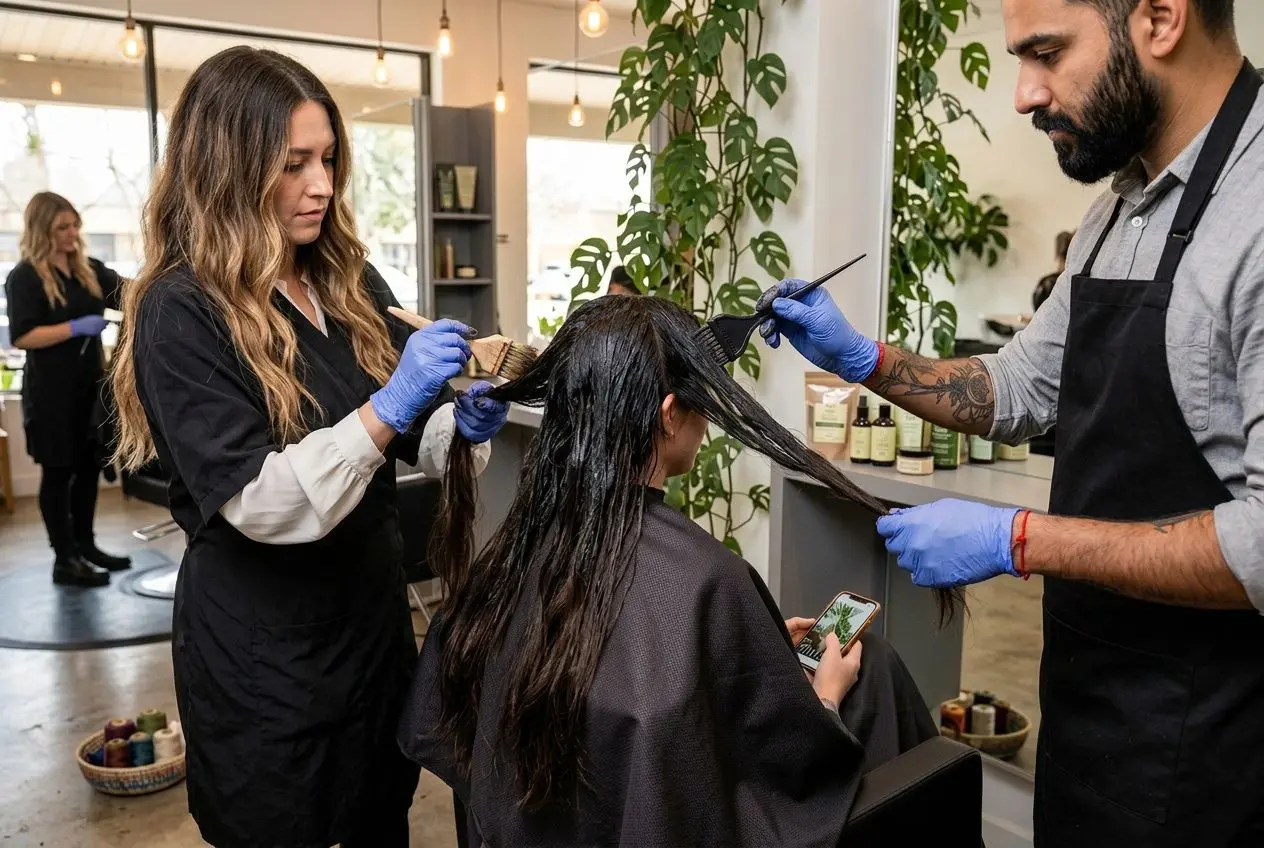
Each format meets a specific need. Hair mascara is suitable for localized touch-ups: its brush targets the desired area without bleeding onto the lengths. A gel dye is closer to a classic semi-permanent formula and fades after approximately 6 to 8 shampoos. Semi-permanent dyes, meanwhile, can last up to ten shampoos.
- Hair mascara: maximum precision (5/5), does not transfer once dry, and lasts 1 to 2 shampoos. It is suitable for white temples or isolated roots and is applied to dry hair, section by section, from the bottom up.
- Color spray: diffused result, estimated precision of 2/5, frequent transfer, and hold of 2 to 3 shampoos. It is suitable for an overall, temporary color effect without a long-term commitment.
- Coloring mousse: precision of 2/5, partial transfer, and hold of 3 to 6 shampoos. Its more diffused result is less suitable for highly targeted root touch-ups on white hair.
The choice between a coloring shampoo, a coloring mask, and a cream format depends on the goal: reviving a shade, enhancing shine, or targeting a specific area. The coloring mask provides color care in a single step and nourishes the fiber during the leave-in time. The coloring shampoo works gradually, with low application precision and hold limited to 3 to 5 shampoos. It is therefore less suitable for occasional touch-ups on white hair.
Covering white hair without root effect
If you are looking for a non-permanent dye for white hair, the chosen shade plays a central role. A shade slightly darker than the natural base color promotes a uniform result and softens the demarcation between pigmented hair and white strands. Without bleach, no formula can lighten hair beyond its initial base.
Temporary dyes can cover white hair by up to 30%, depending on the formulation and shade. Their gradual fading avoids a sharp regrowth line between the roots and the colored lengths. This soft transition is a suitable alternative for those who want to take care of their hair as well as their health, without committing to a permanent dye.
Copper or red highlights depending on the base
On a light or blonde base, surface pigments naturally reveal golden or copper highlights, sometimes slightly golden depending on the formula. On a brown base, warm shades express themselves with greater depth. On very white or gray hair, a darker shade gives a more uniform result from the first applications: the large proportion of cuticles lacking melanin absorbs more of the pigment deposited on the surface.
No non-permanent dye formula, whether of botanical origin or composed of cosmetic synthetic dyes, can create an ammonia-free blue effect on a dark base without prior lightening. Similarly, an ammonia-free ash result on brown hair remains difficult to achieve without bleaching. A shade equal to or slightly darker than the starting color offers the most reliable results. A gentle approach to respect the hair fiber, without ammonia, based on active ingredients of botanical origin developed for over 45 years.
Gentle ammonia-free hair dye for sensitive scalps
Sensitive, reactive scalps, or those weakened by medical treatments, require formulas capable of respecting the hair fiber without introducing aggressive substances. Before any application, understanding the risks associated with conventional dyes helps identify a truly gentle solution. For over 45 years, MAHÉ has supported these profiles with expertise based on rigorous formulation and the absence of irritating compounds without compromise.
Precautions after an allergy or cancer
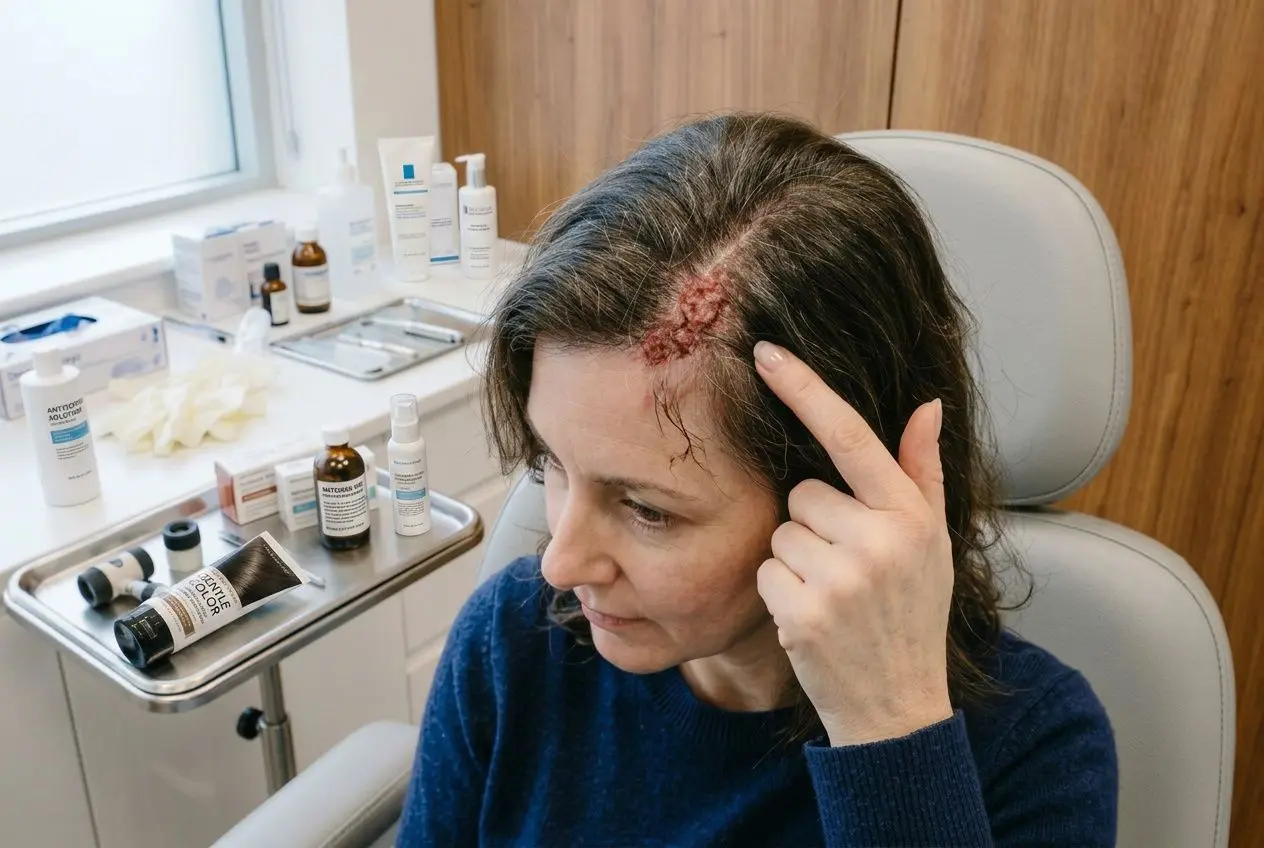
After an allergy to permanent hair dyes or during a period of weakened hair following cancer, vigilance remains essential. An ammonia-free, paraben-free, and oxidant-free hair dye formula presents a superior tolerance profile, but it never guarantees the complete absence of a reaction. A sensitivity test should be performed 48 hours before application, behind the ear or in the crook of the elbow, including with every new use.
- PPD (paraphenylenediamine): a major allergen in permanent dark dyes, it can cause irreversible sensitization. Its absence must be checked in the INCI list before any application on reactive skin.
- Hydrogen peroxide: it alters the hair's natural melanin, making the fiber more porous and brittle over time. A formula without hydrogen peroxide helps preserve the structural integrity of the hair strand.
- Ammonia: this powerful alkaline agent can promote scalp irritation, itching, and aggressive fumes. Replacing it with gentler active ingredients is an important precaution for sensitive profiles.
Between 2019 and 2025, Anses identified 124 adverse effects related to hair dyes: 91% concerned permanent dyes, and 63% of these cases were judged serious. Taking care of your hair as well as your health means choosing formulas where every ingredient is identifiable and justified.
MAHÉ dye with cosmetic synthetic dye
MAHÉ dye is a non-permanent coating formula. Unlike a permanent chemical dye, it does not open the cuticles or change the hair's internal pigments. The cosmetic synthetic dye deposits on the surface to provide the shade, while the active ingredients of botanical and marine origin help care for the fiber.
The MAHÉ range is a true professional ammonia-free color, formulated with 93% to 98% ingredients of natural origin, notably with organic linseed oil, organic castor oil, and Breton marine bamboo. Application is done on clean and dry hair, section by section, from the back to the front, using the provided brush. The leave-in time is 45 to 60 minutes. After a thorough rinse, wait 3 to 4 days before the first shampoo so that the shade stabilizes and reveals its intensity.
Golden blonde and dark brown shades
The MAHÉ range covers many hair bases, from warm blondes to deep browns. On naturally blonde hair, the formula reveals luminous golden highlights thanks to the interaction of the cosmetic synthetic dye with the residual melanin. On a darker base, the shades express themselves with greater depth and persistence, because the hair's pigment density strengthens the hold of the surface deposit.
For a dark brown base, MAHÉ offers shades that bring shine and even out the color without altering the fiber's structure. The MAHÉ natural dye, that is, without henna or oxidant, gradually evolves for about four days after application, allowing the dye to stabilize on the surface of the hair. This evolution is characteristic of coating formulas: the color gains depth and radiance over the days, without stressing the fiber.
MAHÉ 125 ml bottles provide an average of 2 to 3 applications, while the 250 ml bottles provide 4 to 5. They can be reused for one year after opening. The range also includes a gloss cream and semi-permanent hair dyes, designed to provide a precise and long-lasting shade. Made in France and available on mahefrance.com, in pharmacies, health food stores, and herbalist shops.
Frequently Asked Questions
What is the difference between temporary hair dye and ammonia-free semi-permanent hair dye?
Temporary hair dye deposits pigments on the surface of the hair without oxidation or penetration into the hair fiber. It disappears after a few shampoos, usually fewer than six, without leaving a noticeable root effect as it fades.
Semi-permanent hair dyes slightly penetrate the outer layers of the hair strand and last for 6 to 10 shampoos. None contain ammonia or bleach: they can darken, tone, or add highlights, but never lighten hair beyond its natural base.
Is ammonia-free hair dye really free from the risk of allergic reactions?
No. The absence of ammonia reduces certain risks of scalp irritation and prevents unpleasant fumes during application, but it does not eliminate all risk of allergic reactions. A formula may contain other alkaline agents, such as monoethanolamine (MEA), as well as synthetic dyes or preservatives that may cause a reaction in sensitive skin.
Anses recorded 124 adverse effects related to hair dyes between 2019 and 2025, 63% of which were considered serious. A skin test, performed 48 to 72 hours before each application behind the ear or in the crook of the arm, remains essential, even with a formula rich in ingredients of botanical origin.
Is MAHÉ hair dye suitable for people allergic to permanent hair dyes?
MAHÉ hair dye was created to meet this need. Mrs. Mahé, a professional hairdresser, was herself allergic to permanent hair dyes. Her formula is ammonia-free, resorcinol-free, hydrogen peroxide-free, and paraben-free.
It contains a coating cosmetic synthetic dye, without henna, incorporated into a base composed of 93% to 98% ingredients of natural origin. It offers a gentle alternative for sensitive scalps, people recovering from illness, and those who wish to avoid certain harsh substances found in conventional hair dyes.
However, this formula does not guarantee the absence of a reaction. A preliminary sensitivity test remains essential, without exception.
