

Posted by Mahé
on June 22, 2026

Table of Contents
- Why does the scalp itch?
- The best oil- and plant-based remedies
- Essential oils to soothe an itchy scalp
- Which natural shampoo to choose for dandruff
- Daily habits to prevent an itchy scalp
- Frequently Asked Questions
For an itchy scalp, natural solutions: these simple guidelines help you understand the causes, adjust your habits, and choose plant-based treatments that are better tolerated. The goal remains the same: to soothe without irritation, especially when a sensitive scalp reacts quickly to washing, fragrance, or heat.
Why does the scalp itch?
Scalp itching can have many different causes. Dry scalp, dandruff, a reaction to a hair care ingredient, or a skin condition: scalp itching must be properly identified before seeking a lasting solution.
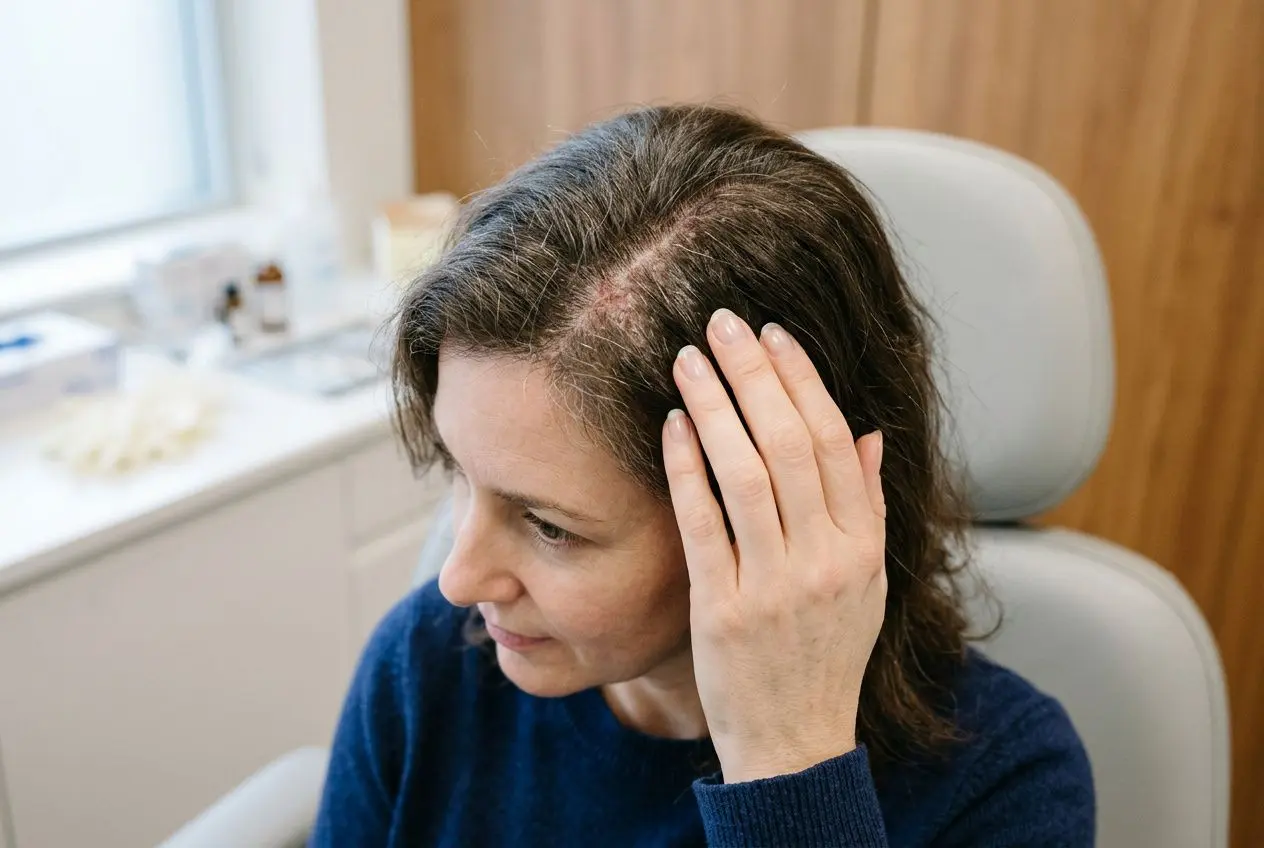
Common causes related to hygiene and products
The first thing to check is often your washing routine. Water that is too hot, harsh sulfate shampoos, or inadequate rinsing can weaken the hydrolipidic film. The scalp then loses its protection, which can lead to scalp irritation, tingling, and, over time, an imbalance of the scalp.
Highly loaded formulas can also perpetuate discomfort. Sulfates, silicones, parabens, synthetic fragrances, or PPD in certain hair dyes are known to cause contact reactions in sensitive scalps. For sensitive scalps, opt for a natural herbal shampoo free from these ingredients, designed to preserve the scalp's balance.
- Washing too frequently: shampooing more than once every two days can remove too much sebum and worsen scalp dryness, especially on dry hair.
- Water that is too hot: it increases discomfort and destabilizes the protective barrier.
- Allergic ingredients: synthetic fragrances, certain preservatives, and sulfates are common triggers for sensitive scalps.
- Inadequate rinsing: product residue left at the roots can perpetuate scalp itching.
In practice, a natural mint treatment made with plant extracts and mild surfactants helps limit residue while respecting natural hydration. The water base combined with decyl glucoside supports the scalp's balance with continued use.
Dandruff, stress, and internal factors
When external causes are not enough to explain the discomfort, you need to look further. Dandruff can be dry or oily, and the underlying mechanism is different. Dry dandruff often appears on a dry scalp lacking sebum; oily forms are more likely linked to overproduction, associated with the Malassezia furfur fungus.
Conversely, stress and hormonal changes affect sebum production and the skin's microbiome. The scalp then becomes more reactive, with dandruff flare-ups or widespread irritation that is difficult to link to a single trigger. Insufficient intake of omega-3s, B vitamins, zinc, or iron can also worsen scalp dryness.
When to consult a doctor
Plant-based treatments have their place, but they cannot replace a diagnosis when symptoms persist. A natural solution or simple habits can relieve mild discomfort caused by washing too frequently or temporary sensitivity. However, seborrheic dermatitis, psoriasis, or eczema suggested by the clinical presentation requires medical advice.
A consultation becomes necessary if scalp itching is accompanied by persistent redness, pain, visible lesions, or heavy dandruff despite several weeks of appropriate treatment.
The best oil- and plant-based remedies
Plant oils, vinegar, aloe vera, or herbal infusions do not work in the same way: some treatments nourish, others rebalance, and others help soothe an irritated scalp. The right choice depends above all on the underlying condition: dryness, excess sebum, occasional discomfort, or dandruff.
Coconut, jojoba, and castor oils to soothe
When an itchy scalp is accompanied by dryness or tightness, plant oils remain a simple and effective base. Virgin coconut oil, cold-pressed, is often chosen for an itchy scalp natural remedy: it nourishes, helps soothe a sensitized scalp, and limits the proliferation of microorganisms involved in certain types of dandruff. In practice, a gentle massage once a week is generally enough to incorporate this step without weighing down the hair.
Along the same lines, jojoba oil stands out because of its similarity to natural sebum. It helps rebalance without suffocating the roots and aids in the removal of dead cells. Castor oil, which is thicker, is better suited to a weakened scalp: it strengthens and complements a treatment designed to soothe an irritated scalp.
These oils can be used alone or mixed with other carrier oils, such as argan or sweet almond. These scalps tolerate an oil base better than harsh formulas.
Apple cider vinegar and aloe vera: two natural staples
If discomfort is caused by a pH imbalance, oil alone may sometimes reach its limits. Unpasteurized organic apple cider vinegar can then be used as a rinse, always diluted: 2 teaspoons in a glass of water, or 3 to 4 tablespoons in 500 ml. After rinsing out the treatment, this step helps cleanse, rebalance, and soothe an irritated scalp without multiplying the number of products used.
Aloe vera gel serves a different need. Rich in water, aloe hydrates and helps soothe an irritated scalp. Applied directly to the skin or as a mask for 30 minutes to an hour, aloe vera gel is also suitable for a dry or simply overheated scalp, without leaving a greasy film on the roots.
The combination of apple cider vinegar and aloe therefore does not pursue the same goal. The former rebalances, the latter hydrates. When itching returns in phases, this alternation of apple cider vinegar and aloe responds better than a single treatment.
Clay, baking soda, and herbal infusions
- Rhassoul clay: mixed with an oil to form a paste, it absorbs excess sebum and helps soothe irritation. A 20-minute application is well suited to oily and sensitive scalps.
- Baking soda: mixed with water to obtain a soft paste, baking soda acts as a gentle exfoliant and helps remove dead skin. It should be used occasionally, never daily.
- Herbal infusions: chamomile, calendula, and nettle, once cooled and strained, can be used as a rinse after shampooing to soothe the scalp and soften the skin.
Unlike an oil treatment, these steps are used at the end of the routine. Once or twice a week is enough, as vinegar that is too concentrated or repeated use of baking soda can strip the scalp and trigger discomfort.
Tulsi powder as a purifying mask and Provence aspic lavender hydrosol as a soothing lotion are useful additions to this range.
Essential oils to soothe an itchy scalp
Essential oils for the scalp can help soothe itching, but must be used within strict guidelines. Their concentration of active ingredients is high, far beyond that of a standard plant oil. For an itchy scalp, the natural solution is therefore not direct application, but proper dilution in a mild shampoo or a suitable oil.
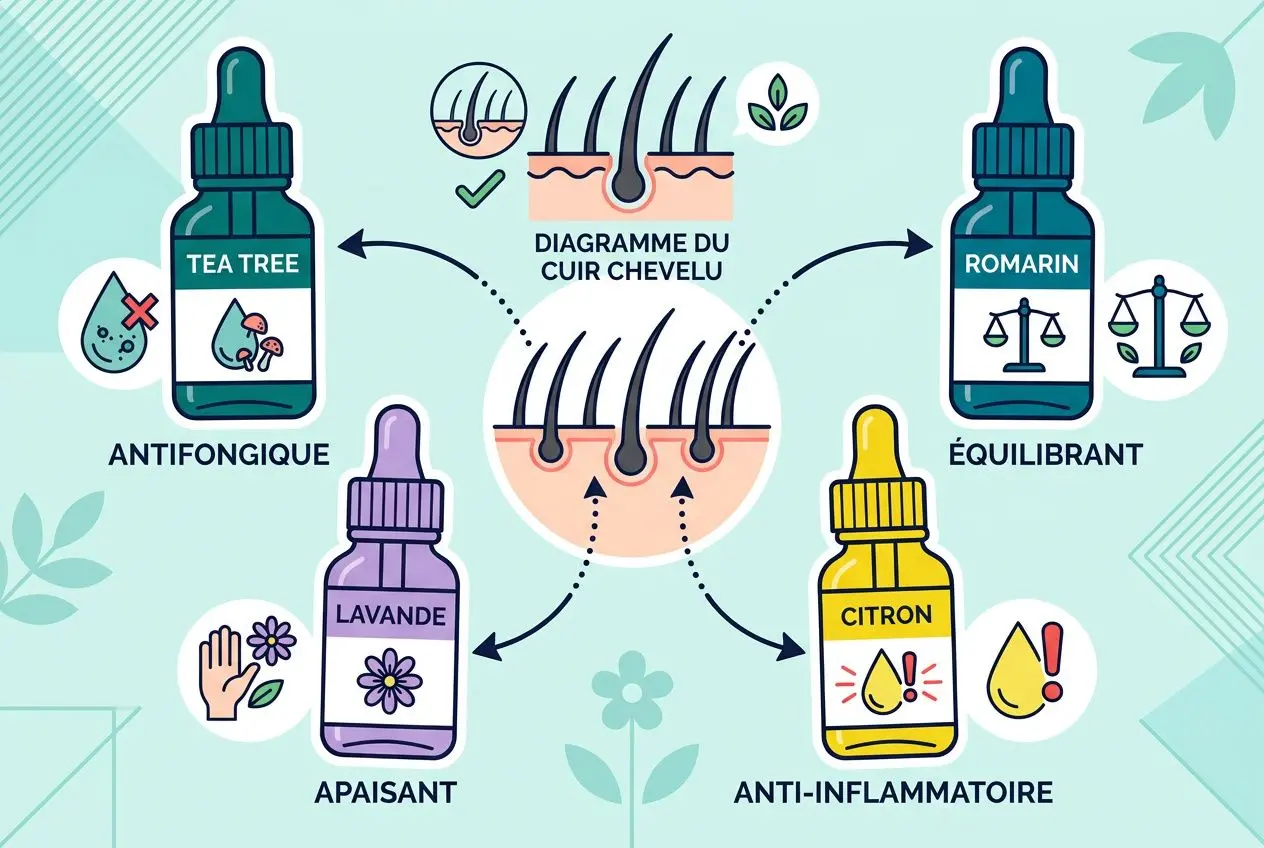
Tea tree and lavender: the most relevant options
Among the best-documented options, tea tree remains a leading essential oil when an itchy scalp is accompanied by dandruff or repeated irritation. Its antifungal and anti-inflammatory properties make it a sound choice for soothing a sensitive, irritated scalp. For sensitive scalps, a few drops are enough in the cleansing treatment.
True lavender takes over for reactive scalps. It is often chosen to soothe irritation, reduce itching, and manage mild dandruff. In addition, lemon or sweet orange are more commonly cited when dandruff is part of seborrheic dermatitis, while rosemary and ylang-ylang are better suited to a weakened scalp and dry ends.
The right approach for safe use
The application method makes all the difference. To treat an itchy scalp with a natural essential oil-based solution, it is best to add 1 to 2 drops to a mild shampoo for use, or 20 to 30 drops to 200 ml of neutral shampoo. In practice: leaving it on for 5 minutes before rinsing allows the treatment to remain in contact with the scalp for a little longer.
One rule never changes: no pure essential oil directly on the skin. It must always be diluted in a carrier, whether a plant oil or a shampoo, to limit the risk of burning and severe skin reaction. Tolerance is just as important as the chosen active ingredient: a properly dosed treatment works without irritating.
| Essential oil | Main indication | Recommended dilution | Precaution |
| Tea tree | Dandruff, irritated oily scalp | 1 to 2 drops in the shampoo | Patch test required |
| True lavender | Sensitive scalp, itching | 1 to 2 drops in the shampoo | Not recommended before age 3 |
| Lemon | Seborrheic dermatitis | 20 to 30 drops per 200 ml of shampoo | Photosensitizing |
| Rosemary | Dry hair, weakened scalp | 20 to 30 drops per 200 ml of shampoo | Not recommended for pregnant women |
Before any first application, a skin test on the inside of the elbow remains essential, especially for sensitive scalps. Pregnant women, children under 3 years old, and people with epilepsy should seek medical or pharmaceutical advice before using an essential oil for treatment purposes.
Which natural shampoo to choose for dandruff
The choice of shampoo matters greatly when an itchy scalp persists. A product that is too harsh perpetuates discomfort, promotes dandruff, and further weakens a sensitive scalp. Conversely, a mild plant-based shampoo can soothe and support the scalp's balance over time.
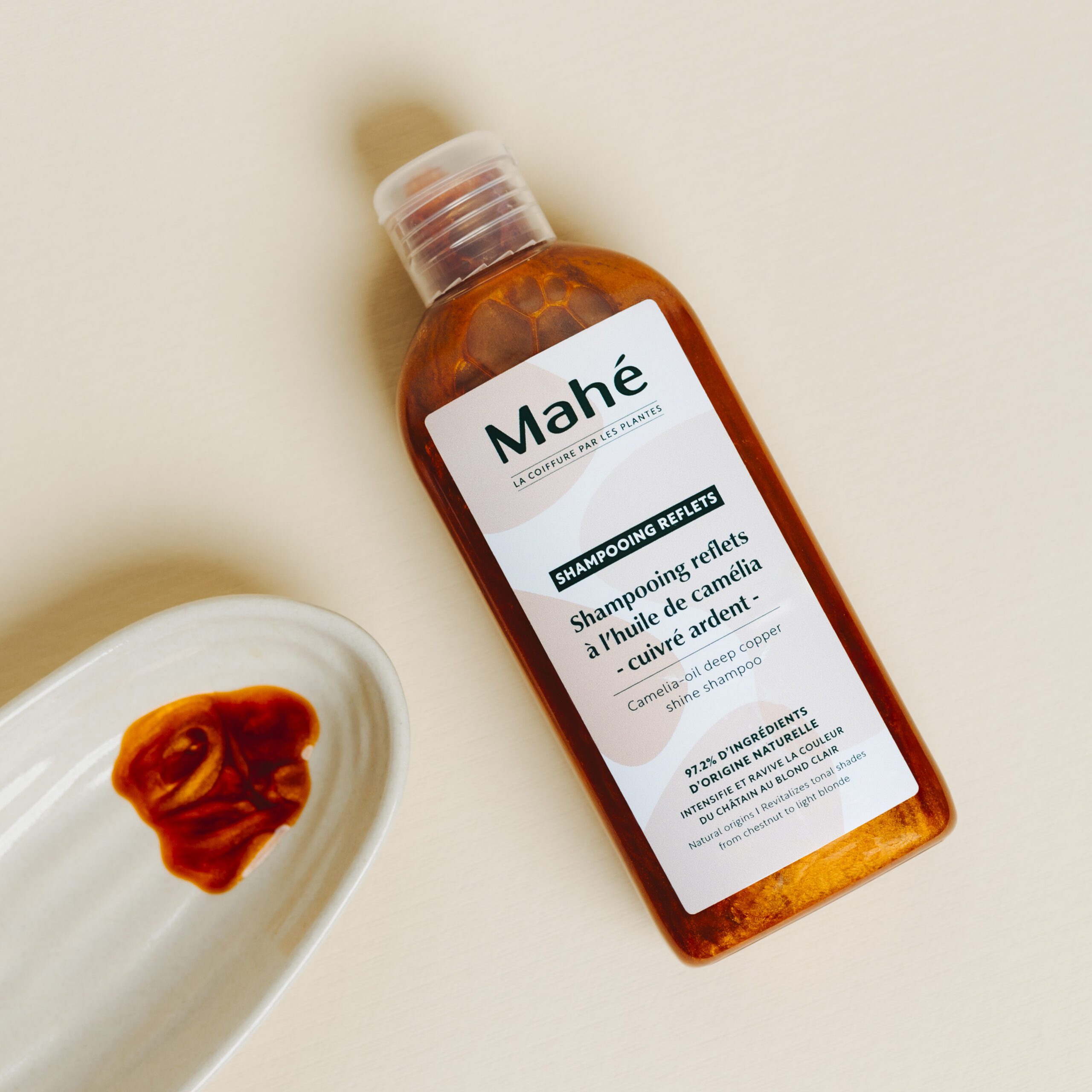
The key plants in an effective soothing shampoo
To soothe the scalp, the composition must be clear and well formulated. A natural shampoo for an itchy scalp benefits from combining several plant actives: white nettle to tone and soften, organic rosemary to help regulate sebum, and common sage to soothe mild discomfort. These actives reinforce each other without stripping an irritated or dry scalp that is already weakened.
The cleansing base is just as important. A neutral pH and a mild surfactant like decyl glucoside cleanse without upsetting the hydrolipidic film, which helps relieve an itchy scalp and preserve the hydrolipidic film. The formulation speaks for itself.
- White nettle: tones the weakened scalp and softens sensations of discomfort, especially in cases of dandruff and tingling.
- Organic rosemary: helps regulate sebum and soothe irritation, useful when the scalp becomes oily quickly while remaining reactive.
- Common sage: helps soothe mild sensitivities and supports the overall rebalancing of the scalp.
- Decyl glucoside: mild plant-based surfactant that cleanses without a stripping effect, preserving natural hydration.
Mahé's maca shampoo combines these actives in a neutral pH formula. In practice, on a damp scalp, a light massage followed by leaving it on for 5 minutes is enough to allow the plants to work before rinsing. This step is well suited to those looking for a natural shampoo for an itchy scalp without weighing down the hair fiber.
Chamomile and mint for a purified scalp
When the goal is to soothe dandruff without irritating the skin, two options stand out. Roman chamomile softens and helps soothe a sensitive scalp, while mint provides a more purifying sensation. The treatment makes a difference on scalps that alternate between discomfort, excess sebum, and weakened ends.
Mahé's natural chamomile shampoo is formulated without hydrogen peroxide or ammonia. It helps soothe an irritated scalp while gradually lightening hair from brown to blonde. It is an ideal choice for sensitive scalps seeking a gentle wash and visible cosmetic benefits.
In contrast, peppermint provides freshness and purification. The natural peppermint conditioner combines mint extracts, castor oil, glycerin, and hydrolyzed wheat protein to nourish a dry scalp, protect the hair fiber, and relieve discomfort without leaving a heavy finish. Used in addition to a suitable wash, it can also help when an itchy scalp is accompanied by dry ends.
Recommended washing frequency and routine
Limiting washing to once or twice a week often helps relieve a reactive, dry, or dandruff-prone scalp. Even a gentle shampoo can become too harsh if used too often, directly affecting the scalp's balance.
How you wash also matters: on wet hair, a circular massage followed by leaving the product on for 5 minutes is all that is needed before rinsing thoroughly with lukewarm water. Once the conditioner has been rinsed out, air-drying is still preferable to using a hairdryer on a setting that is too hot to soothe a sensitized scalp.
Daily habits to prevent scalp itching
Relieving an itchy scalp does not depend on a single product. Treatments are important, of course, but washing habits, styling, and scalp hygiene are equally important.
Washing and styling habits to adopt
The basic principle remains simple: limit anything that perpetuates irritation. When an itchy scalp is rubbed or scratched, the skin barrier becomes even weaker and itching tends to persist. In practice, lukewarm water and drying without high heat are often enough to soothe an already sensitized scalp.
- Rinse with lukewarm water: water that is too hot increases discomfort, especially on a dry or already weakened scalp.
- Looser hairstyles: tight hair ties, caps worn for long periods, or baseball caps trap heat and moisture, two factors that are not conducive to a sensitive scalp.
- Gentle detangling: a wide-tooth comb or soft brush reduces mechanical friction, especially after washing.
- An alternative to scratching: in case of intense itching, it is better to apply a cool treatment or rinse briefly than to try to soothe it with your fingernails.
This approach calls for a consistent washing routine. A gentle shampoo, used without stripping the hair, helps calm itching while respecting the scalp's protective film. In addition, an occasional moisturizing treatment can relieve a reactive scalp, especially if it contains aloe vera: aloe vera gel remains a preferred choice for sensitive scalps, as it provides a cooling effect that is appreciated when soothing without weighing the hair down.
Diet, hydration, and stress management
An external routine is not everything. Scalp hygiene also begins with sufficient intake of omega-3, omega-6, B vitamins, zinc, and iron, which are useful for the comfort of both dry and sensitive scalps. Regular hydration completes this balance: the skin, including on the scalp, gradually becomes more supple.
In contrast, stress can trigger an episode of scalp itching. It influences sebum production and the inflammatory environment, which can make it more difficult to achieve lasting scalp relief. Walking, breathing exercises, yoga, or time to recover help calm this cycle of discomfort. External treatments act on the scalp, but lifestyle also determines the duration of the results.
Limitations of natural remedies and when to consult a doctor
A natural remedy can be useful when discomfort remains mild and occasional. A well-chosen vegetable oil or aloe vera gel can soothe itching and relieve a scalp sensitized by cold, overly aggressive washing, or temporary dryness.
However, if symptoms persist, intensify, or are accompanied by redness, pain, or visible lesions, medical advice becomes necessary. Psoriasis, eczema, or seborrheic dermatitis require an accurate diagnosis. A natural solution can then still be used as a complement to soothe the scalp, but it cannot replace appropriate medical care.
Frequently asked questions
How to naturally soothe an itchy scalp?
To soothe an itchy scalp, the most effective approach remains simple and consistent. A weekly massage with a vegetable oil, such as coconut, jojoba, or castor oil, helps nourish a dry scalp, calm an irritated scalp, and reduce itching.
In addition, a pH-neutral shampoo formulated with plants such as organic rosemary, sage, and nettle supports the skin's balance without irritating it. Leaving the treatment on for 5 minutes before rinsing helps soothe a sensitized scalp with each application.
Which old wives' remedies are effective against a dry, itchy scalp?
Among the most useful old wives' remedies against an itchy scalp, diluted apple cider vinegar rinse still holds its own. It is used after shampooing. In contrast, if a dry scalp feels tight, an aloe vera gel mask left on for 30 minutes provides a cooling effect that is appreciated for soothing the scalp and reducing itching.
Chamomile or nettle infusions can also be used as a complementary rinse. These methods are especially suitable for a dry scalp or occasional itching not related to an underlying medical condition. In practice, one to two applications per week are enough to avoid an overly stripping effect.
How to distinguish dry dandruff from oily dandruff to choose the right treatment?
The difference is quickly apparent. Dry dandruff is fine, white, and falls easily onto the shoulders: it often indicates a dry scalp. Oily dandruff, on the other hand, is yellowish, thicker, sticky, and clings to the scalp. It is often linked to overproduction of sebum and the presence of Malassezia furfur.
A Maca shampoo that moisturizes and balances can be suitable for both types of dandruff. However, a treatment richer in castor oil and glycerin will be preferable for sensitive, dry, or weakened scalps, especially when dandruff is accompanied by itching.
